
Accelerated Shelf Life Testing
Accelerated shelf life testing
Japanese: 加速試験(かそくしけん)
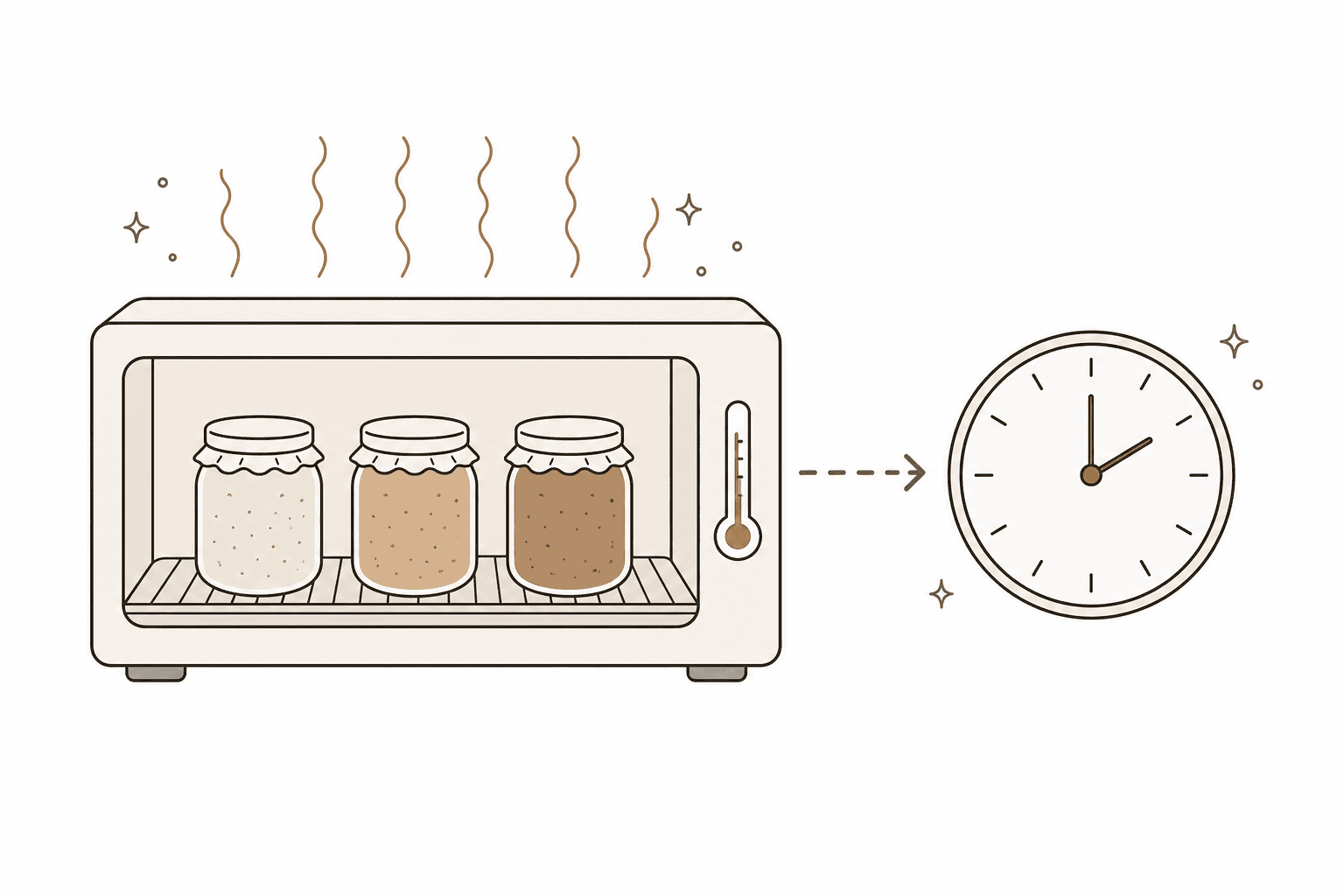
Method of accelerating degradation through high-temperature storage to estimate shelf life.
Accelerated testing stores products at higher-than-normal temperatures to speed degradation, estimating shelf life in shorter time. Based on the Arrhenius equation, shelf life at ambient temperature is back-calculated from high-temperature degradation rates.
Especially useful in new product development when waiting a full year is impractical. However, some degradation modes cannot be reproduced by acceleration, so parallel real-storage testing is recommended. Compressing time to predict the future — a form of time travel in quality management.
Typically conducted at 10-20°C above actual storage temperature, shelf life at ambient conditions is estimated using the Arrhenius equation. However, for complex foods like miso with multiple concurrent changes, comprehensive evaluation of several parameters rather than a single degradation indicator is necessary.