
The Secrets of Fermentation
Episode 4
The koji mold leaves its tools behind
Once the batch is prepared, are the microbes still alive in there?
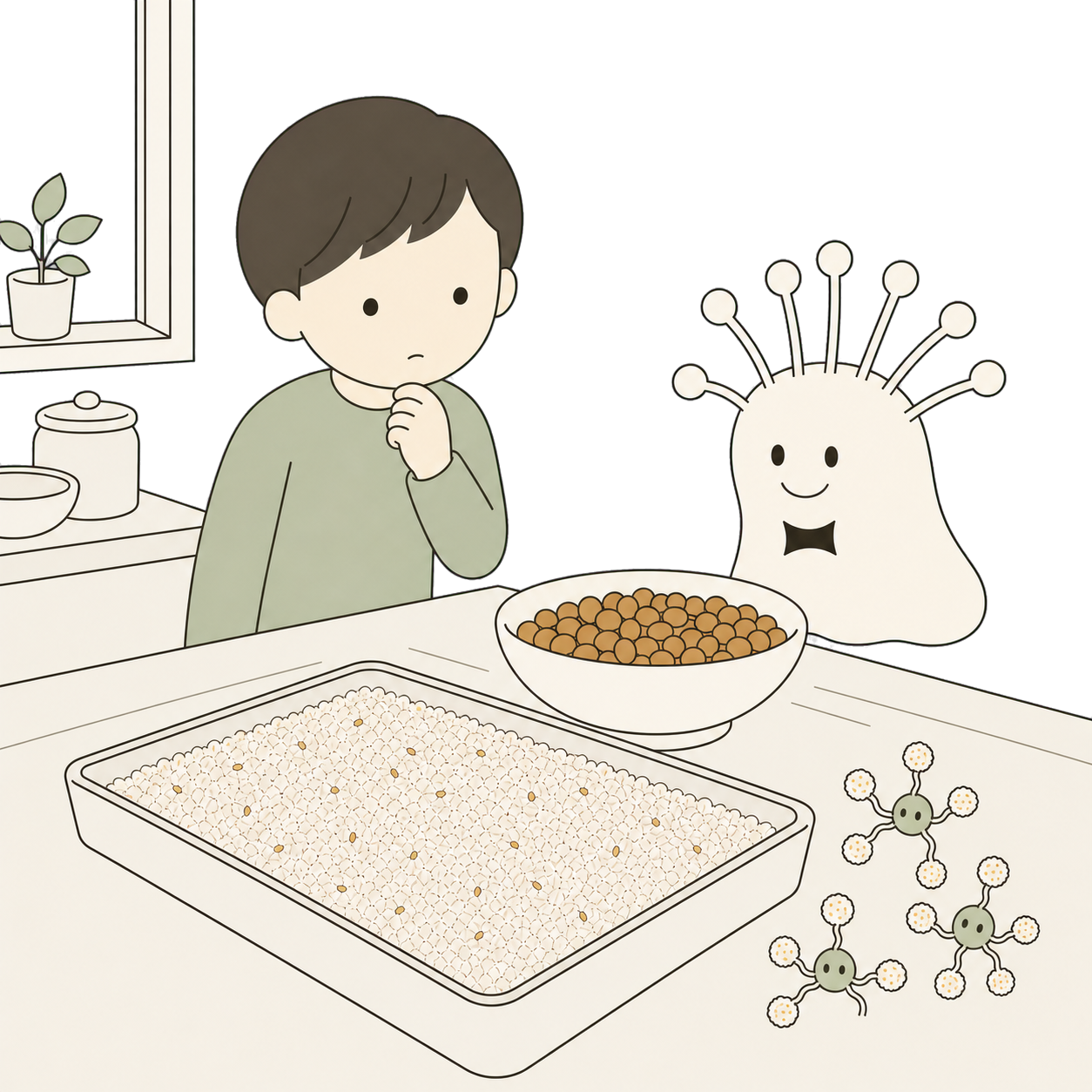
MugiDoes this koji mold work for half a year?

Hakkoh-chanNo. Once you prepare the batch, it can’t multiply.

MugiThen who makes the miso?
Hakkoh-chanBefore that, it leaves its tools behind.
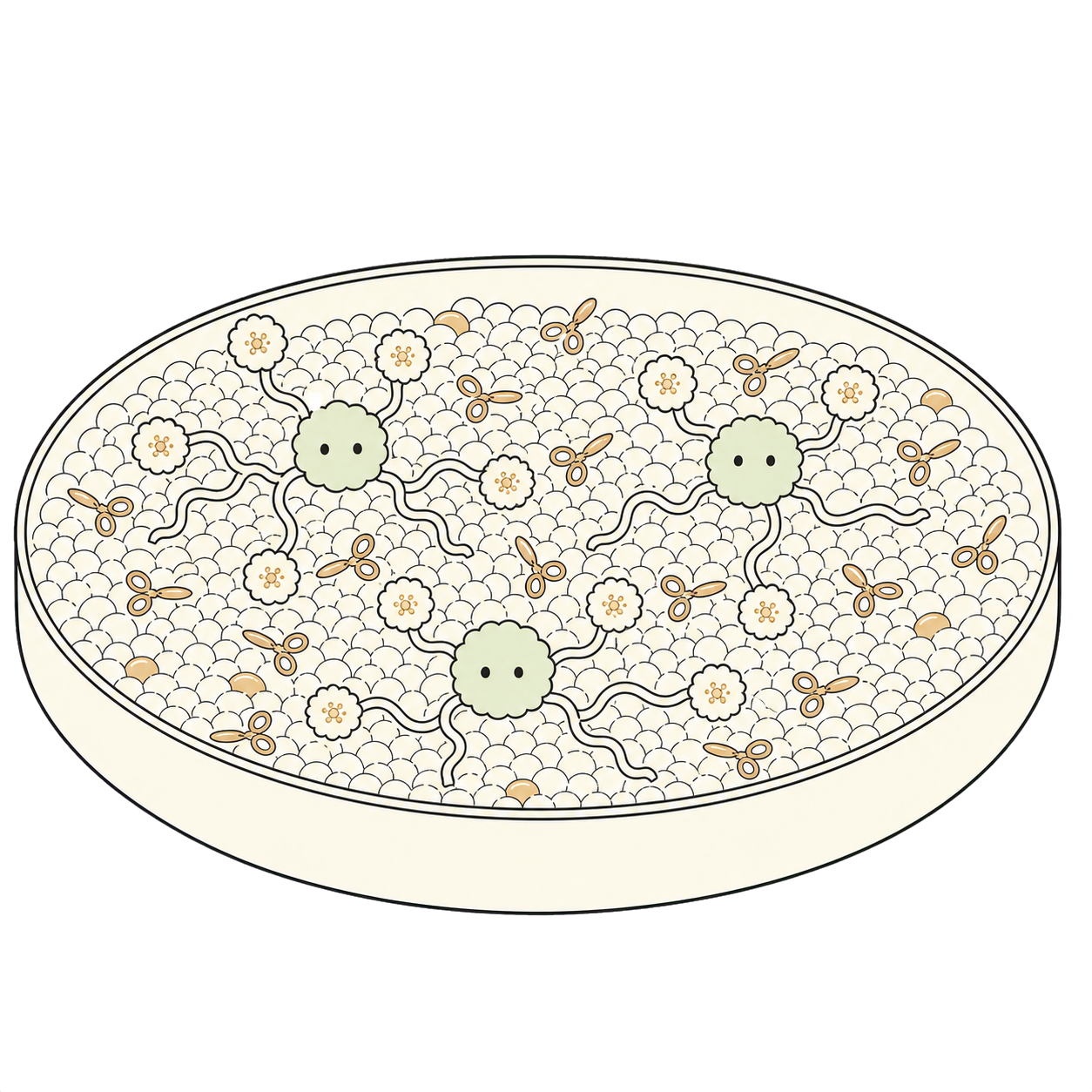
MugiWhat tools?
Hakkoh-chanTiny scissors called enzymes.
MugiWhat do the scissors do?
Hakkoh-chanThey cut the soybeans and the rice into small pieces.
MugiDoes the koji mold do the cutting?
Hakkoh-chanThe enzymes cut. They aren’t the microbe.
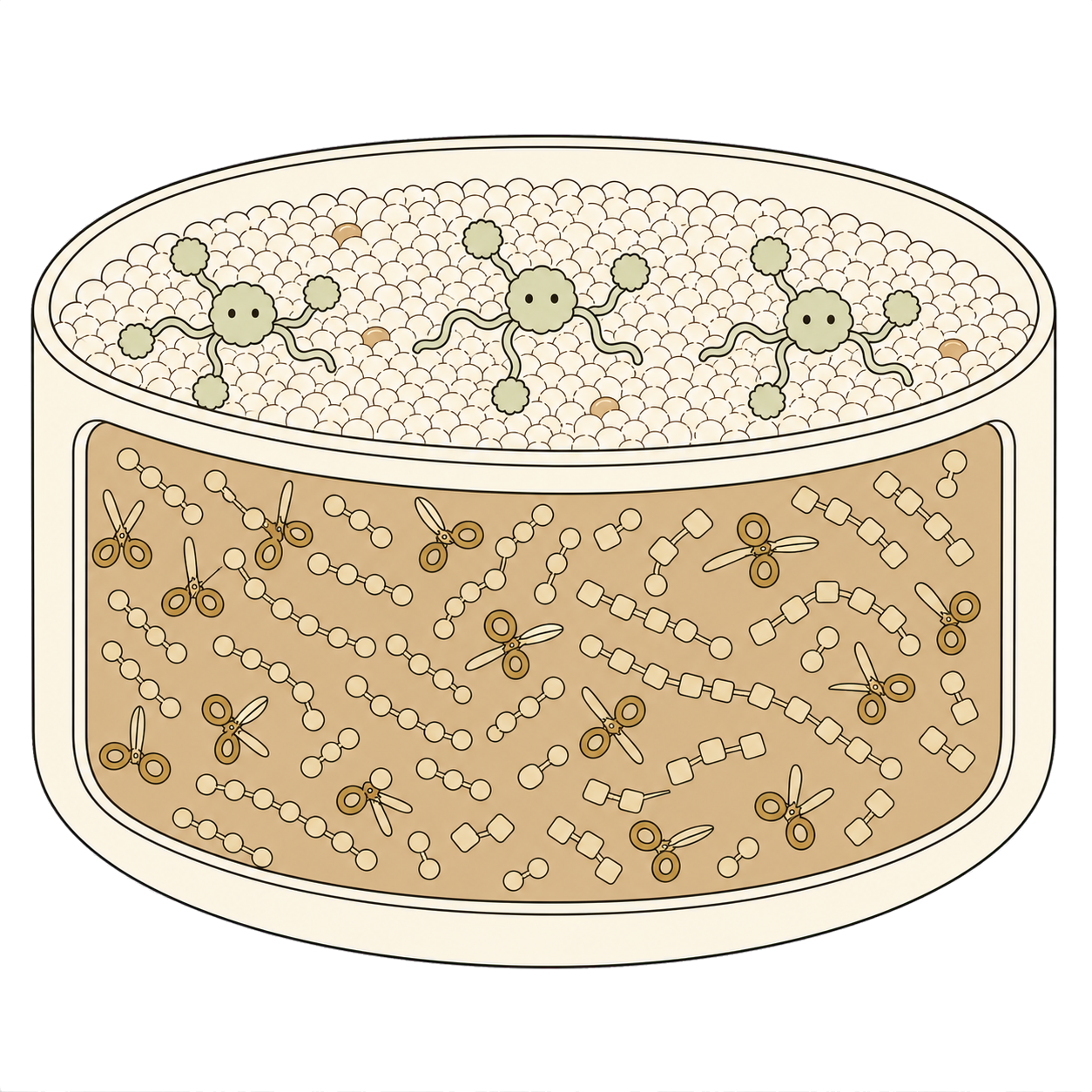
MugiOnce it’s prepared, do the microbes go away?
Hakkoh-chanSome stay. But they can hardly multiply.
Hakkoh-chanAnd little by little they stop being able to work.
MugiWhat about the scissors?
Hakkoh-chanThe scissors stay, and keep cutting.
MugiThey work even though they aren’t alive?
Hakkoh-chanYes. An enzyme isn’t a living thing.
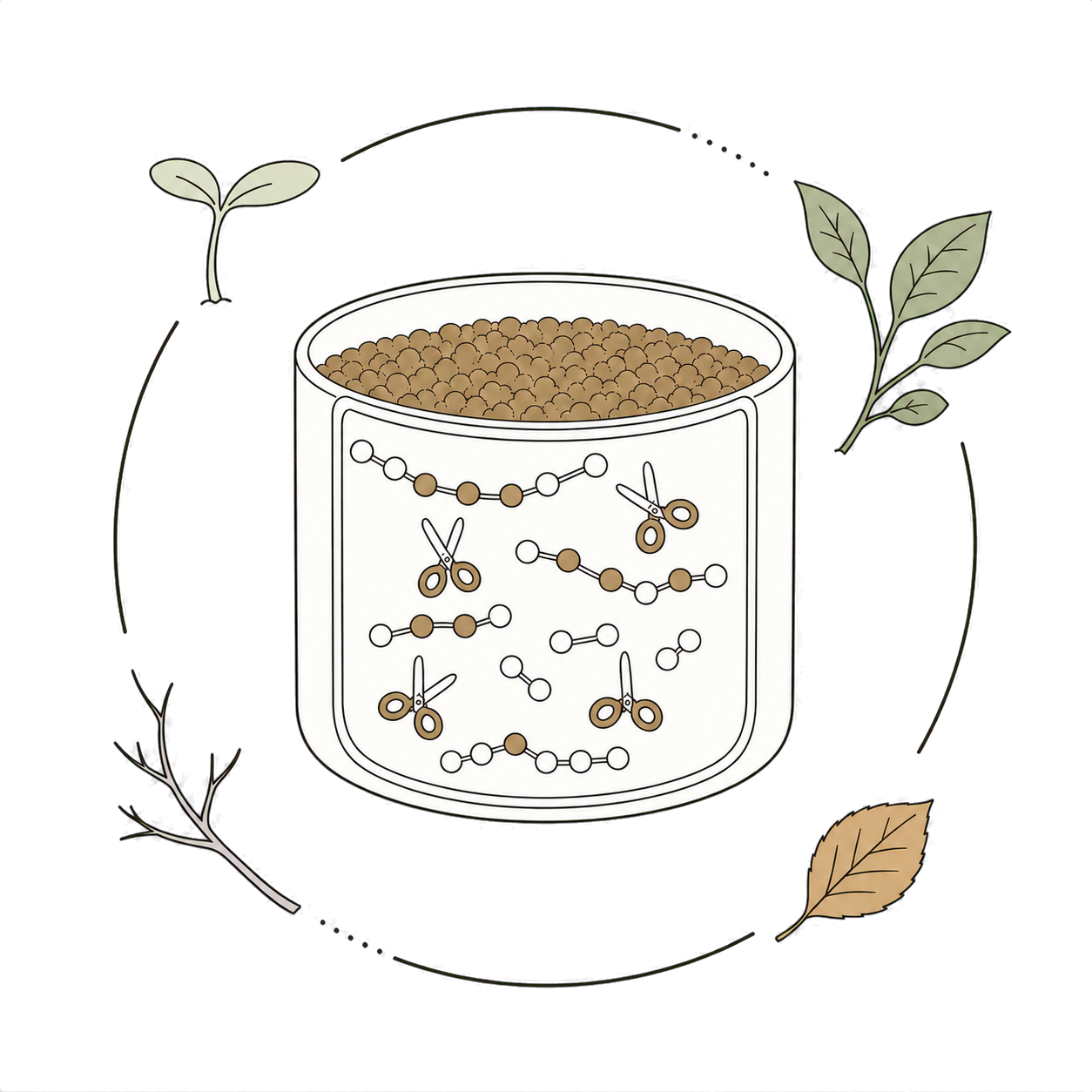
Hakkoh-chanIt’s a tool. As long as the shape holds, it works.
MugiSo it isn’t the microbe working for half a year.
MugiIt’s the enzymes left behind.
Hakkoh-chanThat’s right. That’s what keeps changing the miso.