
Glutamic acid (L-Glutamic acid)
Glutamic acid
Japanese: グルタミン酸(L-グルタミン酸)
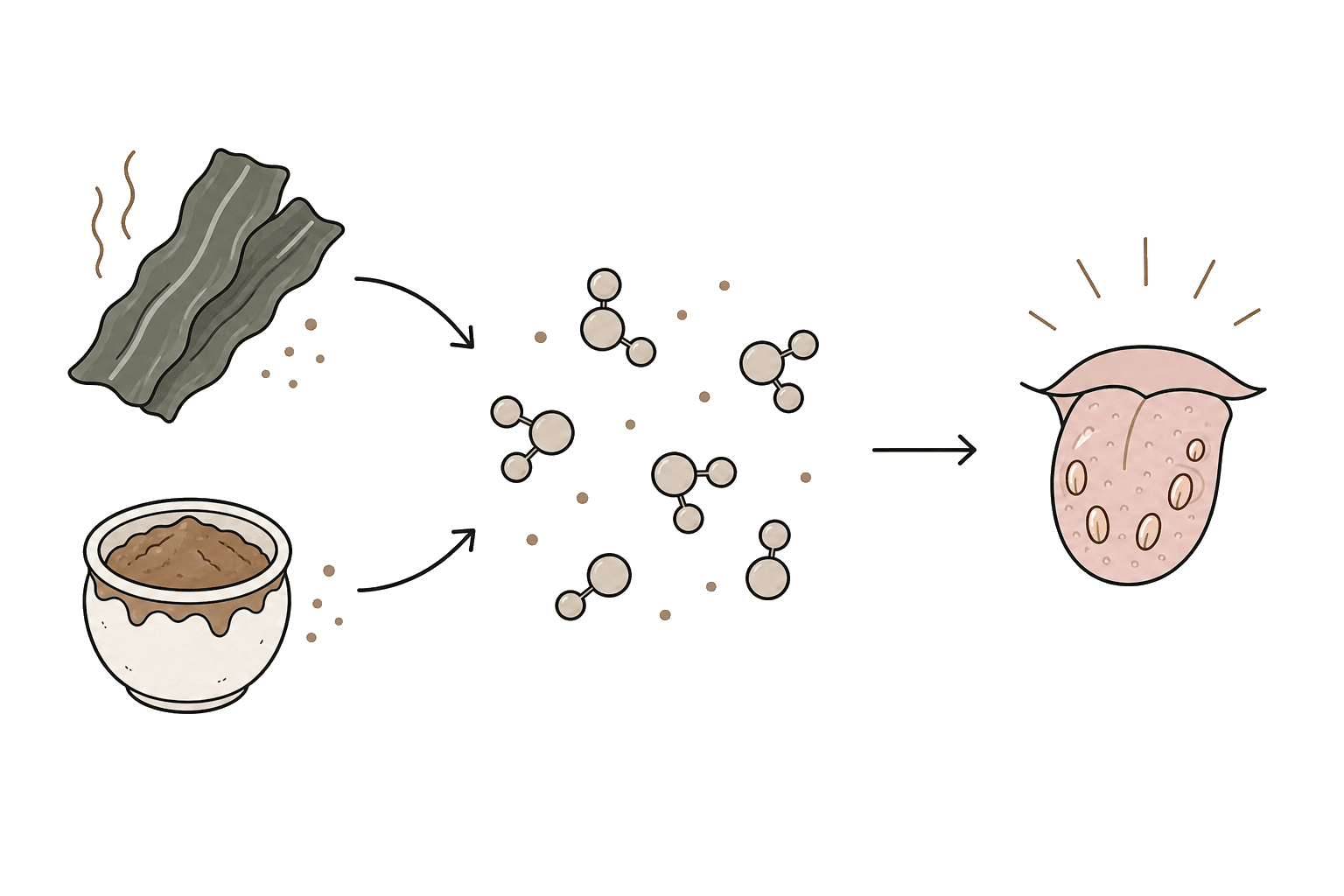
The quintessential umami amino acid. Found abundantly in kombu, miso, and cheese, it stimulates umami receptors on the tongue.
Glutamic acid is the quintessential umami amino acid. In 1908, Kikunae Ikeda at Tokyo Imperial University isolated it from kombu broth and coined the term 'umami.'
One kilogram of miso contains roughly 1,000–2,000 mg of glutamic acid. Each time protease breaks down soybean protein, this amino acid is released. Parmesan cheese contains even more—mature fermented foods are invariably rich in glutamic acid.
Monosodium glutamate (MSG) is industrially purified glutamic acid salt, but the glutamic acid in fermented foods creates complex umami alongside other amino acids and peptides. A depth that pure glutamic acid alone cannot achieve—this is what fermentation-derived glutamic acid offers.