
Protease
Japanese: プロテアーゼ(タンパク質分解酵素)
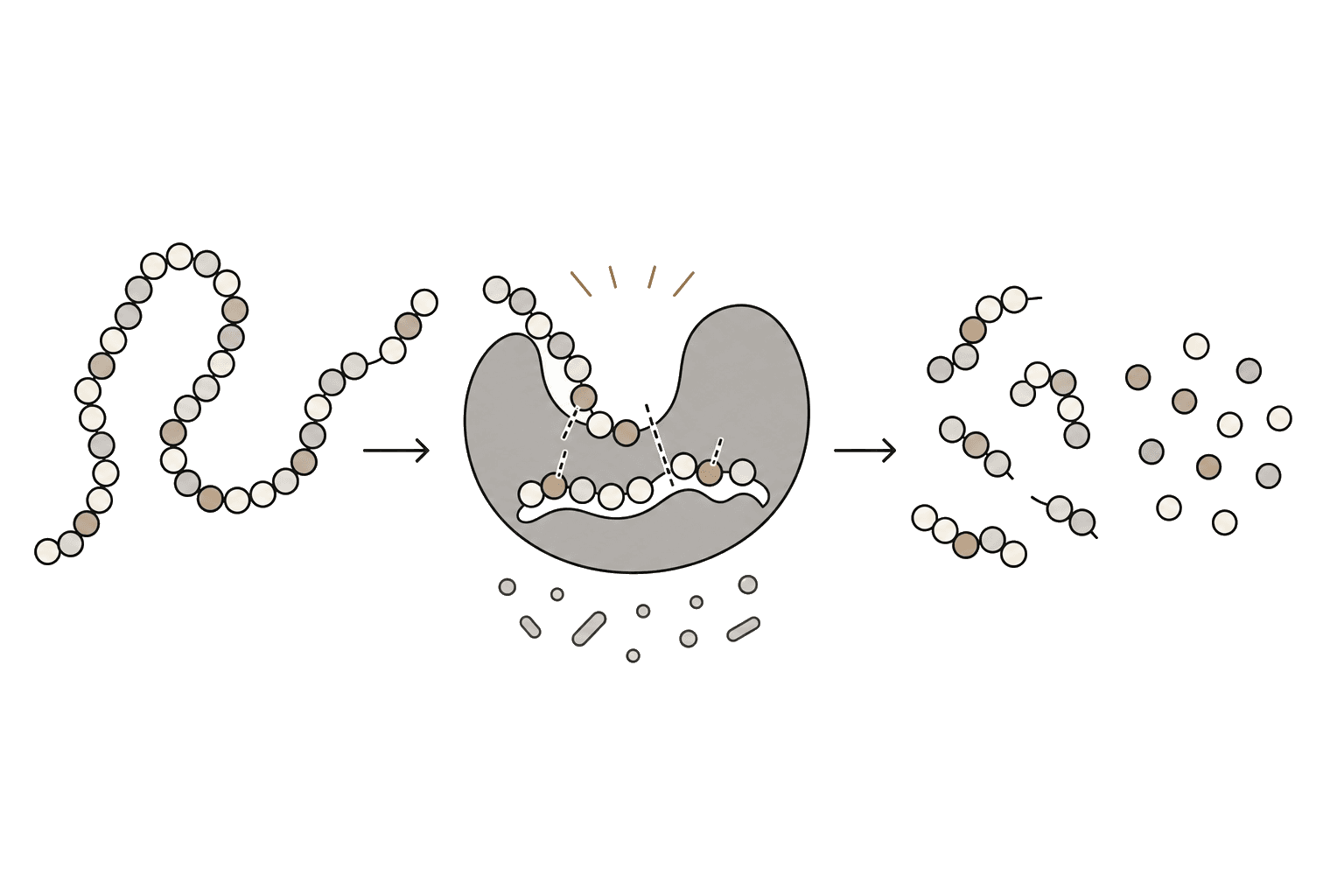
A class of enzymes that cleave peptide bonds in proteins. Proteases secreted by koji mold are central to creating the umami in miso.
Protease is an enzyme that breaks down proteins into amino acids and peptides. In miso-making, most of the umami is owed to this enzyme's work.
Aspergillus oryzae secretes a diverse array of proteases. 'Endo-type' proteases cut within the protein chain while 'exo-type' ones trim from the ends. Working in concert, they efficiently dismantle soybean protein into amino acids. Glutamic acid, aspartic acid—the amino acids that trigger umami on the tongue are products of this precise breakdown.
Proteases have optimal pH ranges: some work in acidic conditions, others neutral or alkaline. Miso's aging environment hovers around pH 5, mildly acidic, where acid proteases often take the lead.