
Salinity
Japanese: 塩分濃度
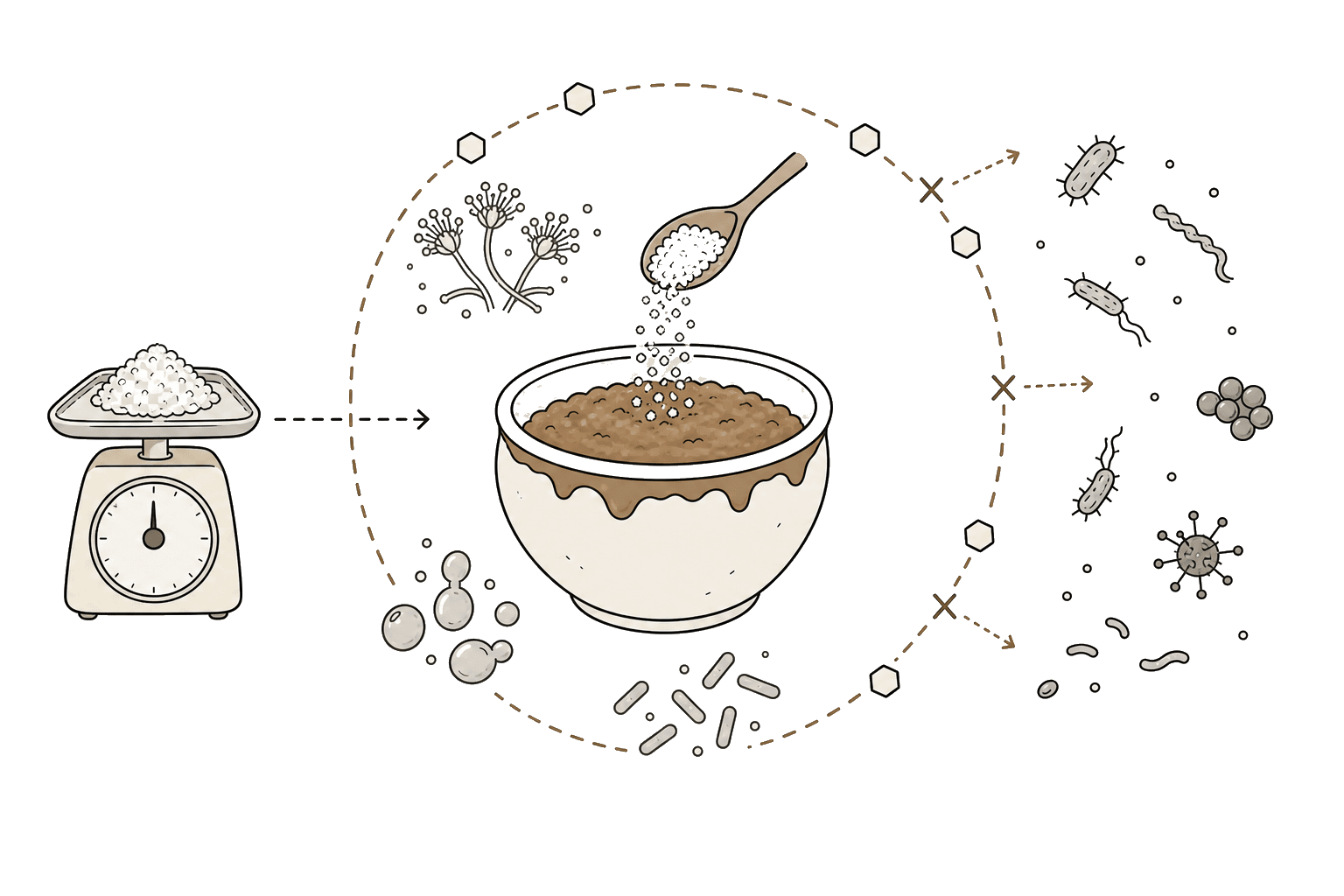
The proportion of salt in a food product. A critical design parameter that directly affects fermentation speed, microbial control, and shelf life.
Salinity is a design parameter that simultaneously determines the safety and flavor of fermented foods. Miso typically contains 10–13% salt—enough to suppress spoilage bacteria while leaving room for salt-tolerant lactic acid bacteria and yeast.
Too much salt slows fermentation; too little increases the risk of contamination. Salt acts as a traffic controller for microorganisms.
Through osmotic pressure, salt draws water from cells. Vegetables softening in nukazuke is this dehydration at work. Designing salt content is both flavor design and safety engineering.