
Learn 03 — Going Wider
How Far Fermentation Reaches
If Basics and the Rabbit Hole are about how fermentation works, these three chapters are about how far it reaches. How the same principle divided across the regions of Japan, took other forms around the world, and how long it has been going on. You need not read them in order.

01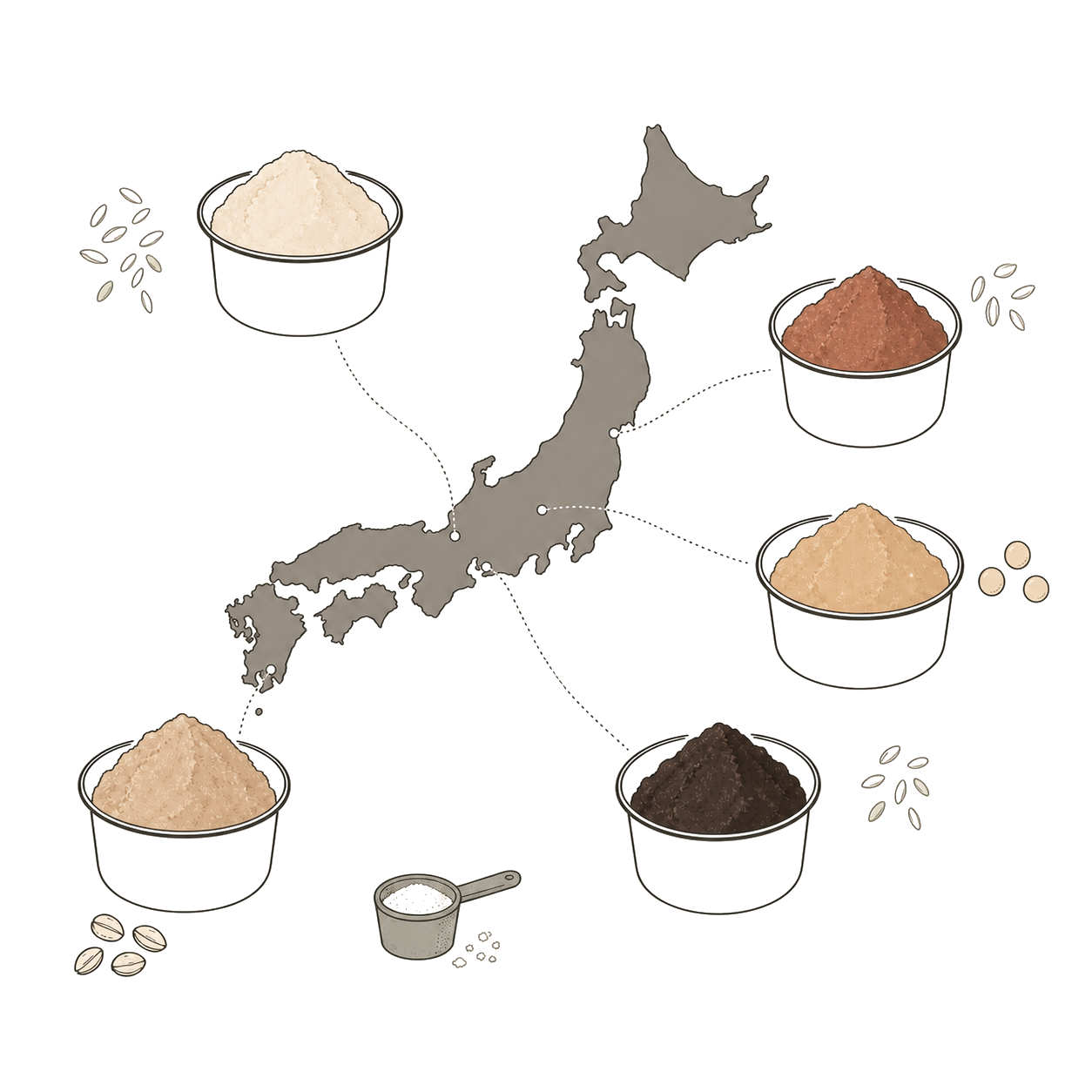 There are so many kinds of miso — what exactly is different about them? Which should I choose? And is it true that Hatcho miso is the saltiest?The misos of Japan differ because the numbers people choose differShinshu, Sendai, Saikyo, Hatcho, the barley miso of Kyushu. We read the regional differences in flavor through four numbers: the material of the koji, the koji-buai, the salt content and the maturation period. We also check, against the food composition tables, whether "Hatcho miso is the saltiest of all" is actually true.Read on About 9 min to read02
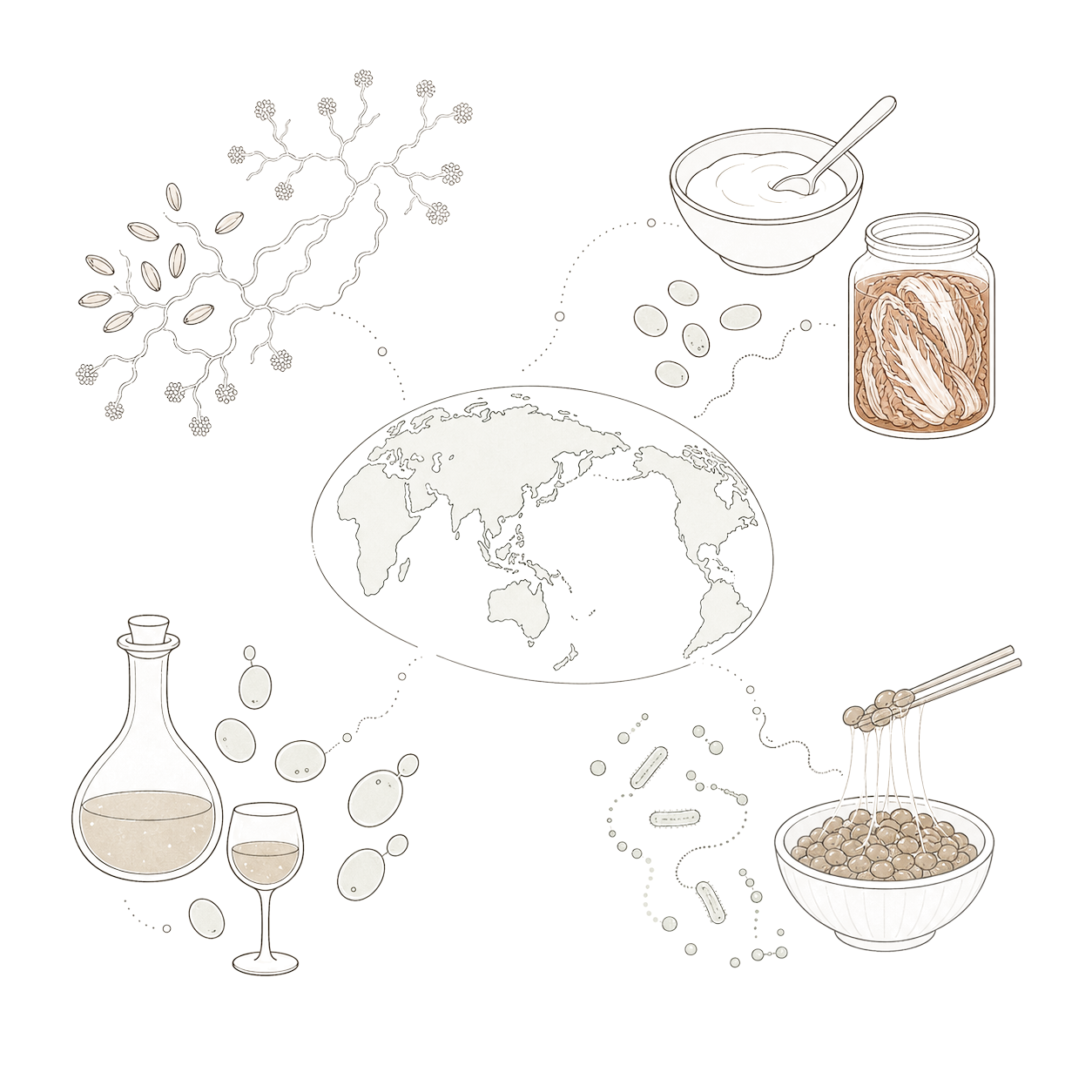 There are fermented foods all over the world, but what do they share with miso, and what is different? How far is it really true that "the principle is the same"?The fermented foods of the world fall into four typesTempeh, kimchi, kombucha, natto, fish sauce. Sort the fermented foods of the world not by country but by "who is playing the lead", and you can see where miso stands and what is unusual about it — including the fact that the means of shutting others out differs by type.Read on About 9 min to read03
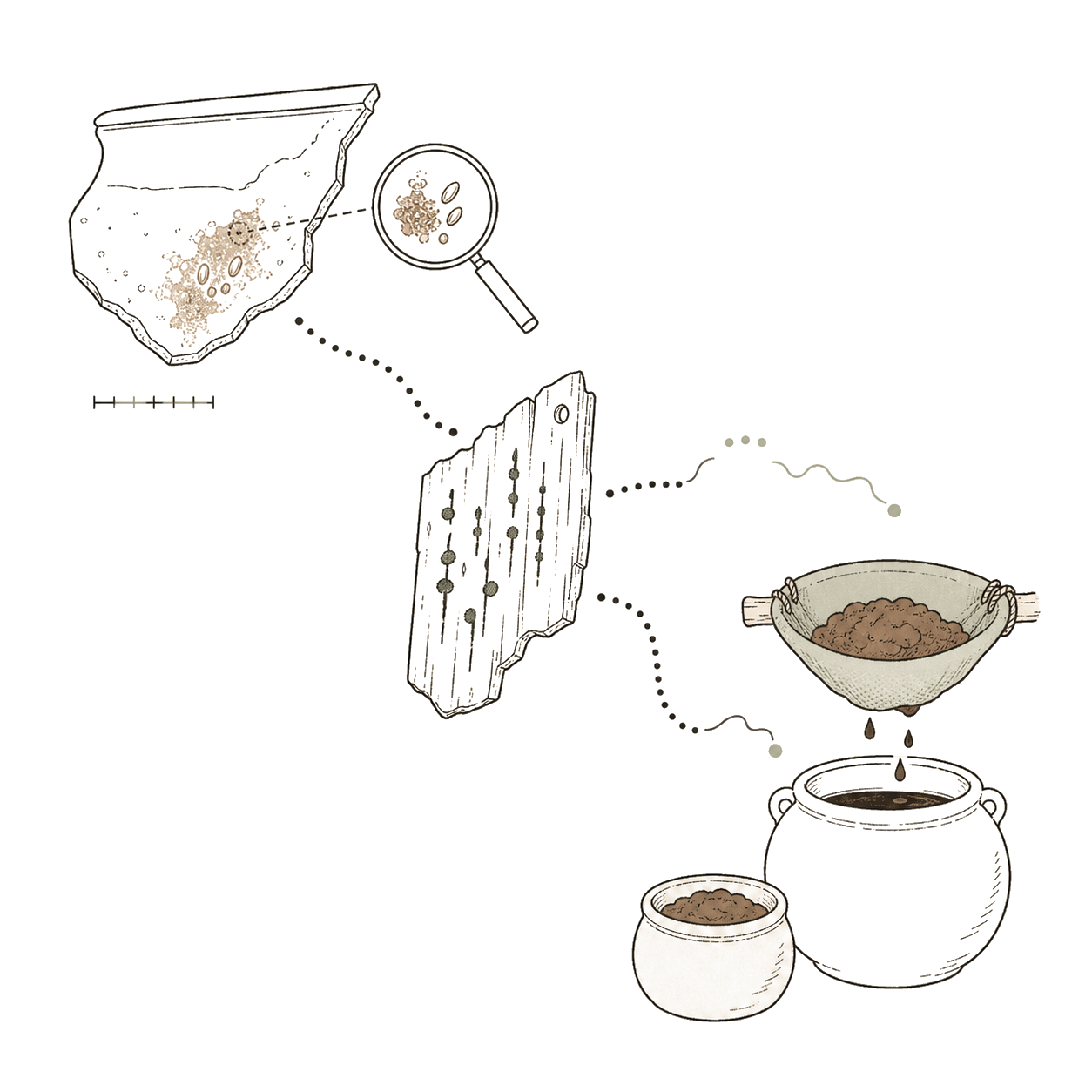 How long has miso been around? Did it come from China? And are those "so many thousand years of history" lines actually true?The history of miso is newer than you think, and vaguer than you thinkThe history of fermentation is a field where numbers easily take on a life of their own. "Beer 8,000 years ago", "jiang 4,000 years ago", "soy sauce transmitted in 1254". We sort out which of these have been verified and which were composed later, by the kind of evidence behind them.Read on About 10 min to read
There are so many kinds of miso — what exactly is different about them? Which should I choose? And is it true that Hatcho miso is the saltiest?The misos of Japan differ because the numbers people choose differShinshu, Sendai, Saikyo, Hatcho, the barley miso of Kyushu. We read the regional differences in flavor through four numbers: the material of the koji, the koji-buai, the salt content and the maturation period. We also check, against the food composition tables, whether "Hatcho miso is the saltiest of all" is actually true.Read on About 9 min to read02There are fermented foods all over the world, but what do they share with miso, and what is different? How far is it really true that "the principle is the same"?The fermented foods of the world fall into four typesTempeh, kimchi, kombucha, natto, fish sauce. Sort the fermented foods of the world not by country but by "who is playing the lead", and you can see where miso stands and what is unusual about it — including the fact that the means of shutting others out differs by type.Read on About 9 min to read03How long has miso been around? Did it come from China? And are those "so many thousand years of history" lines actually true?The history of miso is newer than you think, and vaguer than you thinkThe history of fermentation is a field where numbers easily take on a life of their own. "Beer 8,000 years ago", "jiang 4,000 years ago", "soy sauce transmitted in 1254". We sort out which of these have been verified and which were composed later, by the kind of evidence behind them.Read on About 10 min to read