
Learn 01 — Fermentation Basics
Fermentation Basics
From not knowing what fermentation is, to being able to make one batch of miso with confidence. Six chapters you can read in order.

01 You know the word "fermentation", but what is actually going on? How is it different from going bad? And half a year — does that not sound like hard work?Fermentation is leaving the remaking to microbesFermentation means entrusting the remaking of food to microbes. We look at how the line between fermentation and spoilage is drawn from our side, how safety is nonetheless decided by conditions you can measure, and how, of the six months a batch takes, you move your hands for only one day.Read on About 9 min to read02
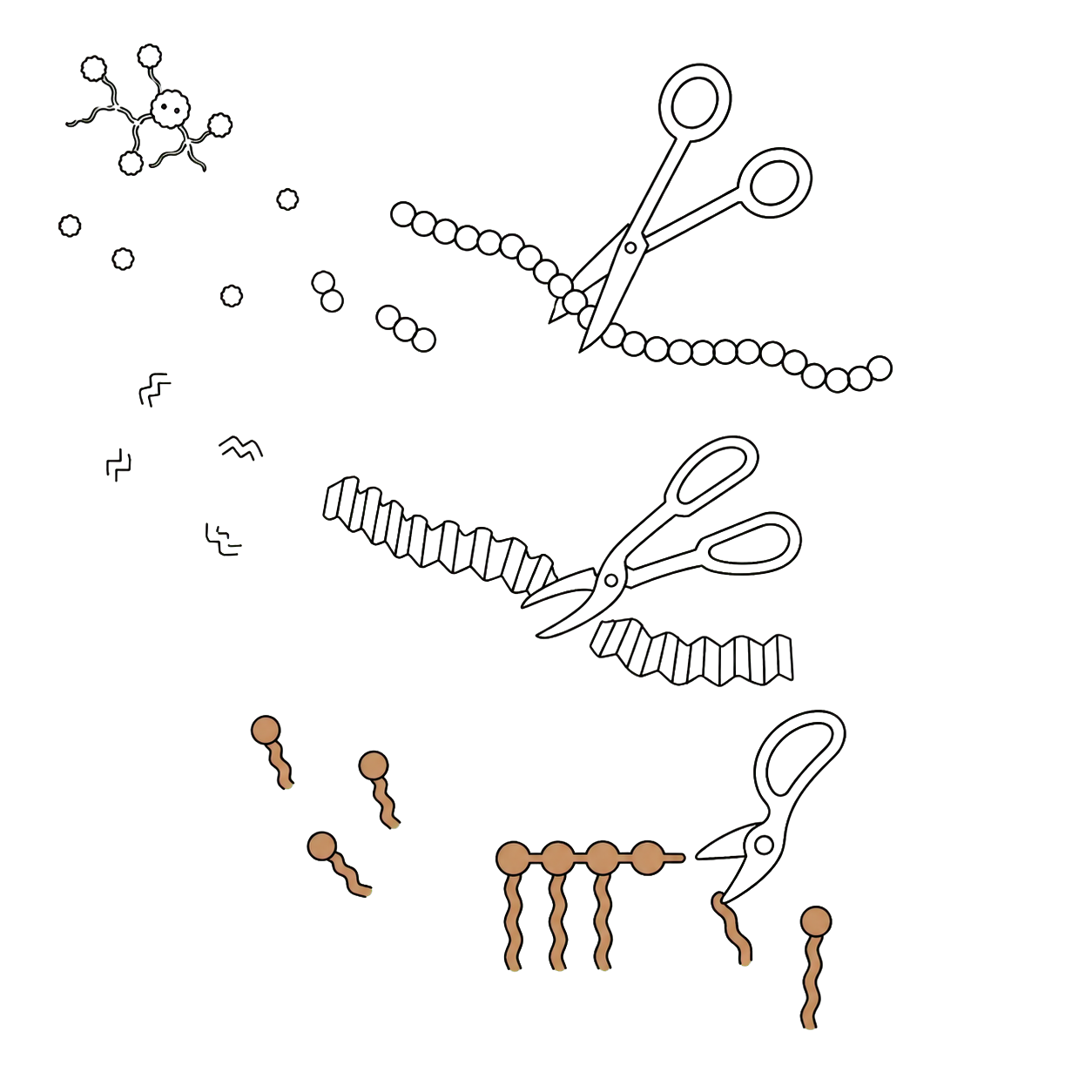 Is koji just that white rice? The bag says it is a mold — is it really all right to eat? And once the batch is made, are the microbes still alive in there?The workers are not the microbes but the enzymes they left behindWhat koji really is, and what to make of the worry about eating a mold. Then the least intuitive thing about miso: the moment you prepare the batch, the koji mold leaves the stage — and fermentation carries on anyway. This is also where the reason for cooling to body temperature becomes clear.Read on About 10 min to read03
 Boiled soybeans are not especially tasty, so why does the flavor become so concentrated once they are miso? Is something increasing?It tastes good because big molecules have no tasteBoiled soybeans do not taste of miso. Fermentation is not adding flavor; it is cutting the flavor that was already there down to a size the tongue can receive. We look at how umami, sweetness and bitterness all come out of the same reaction together, and how color becomes a scale of how far things have gone.Read on About 9 min to read04
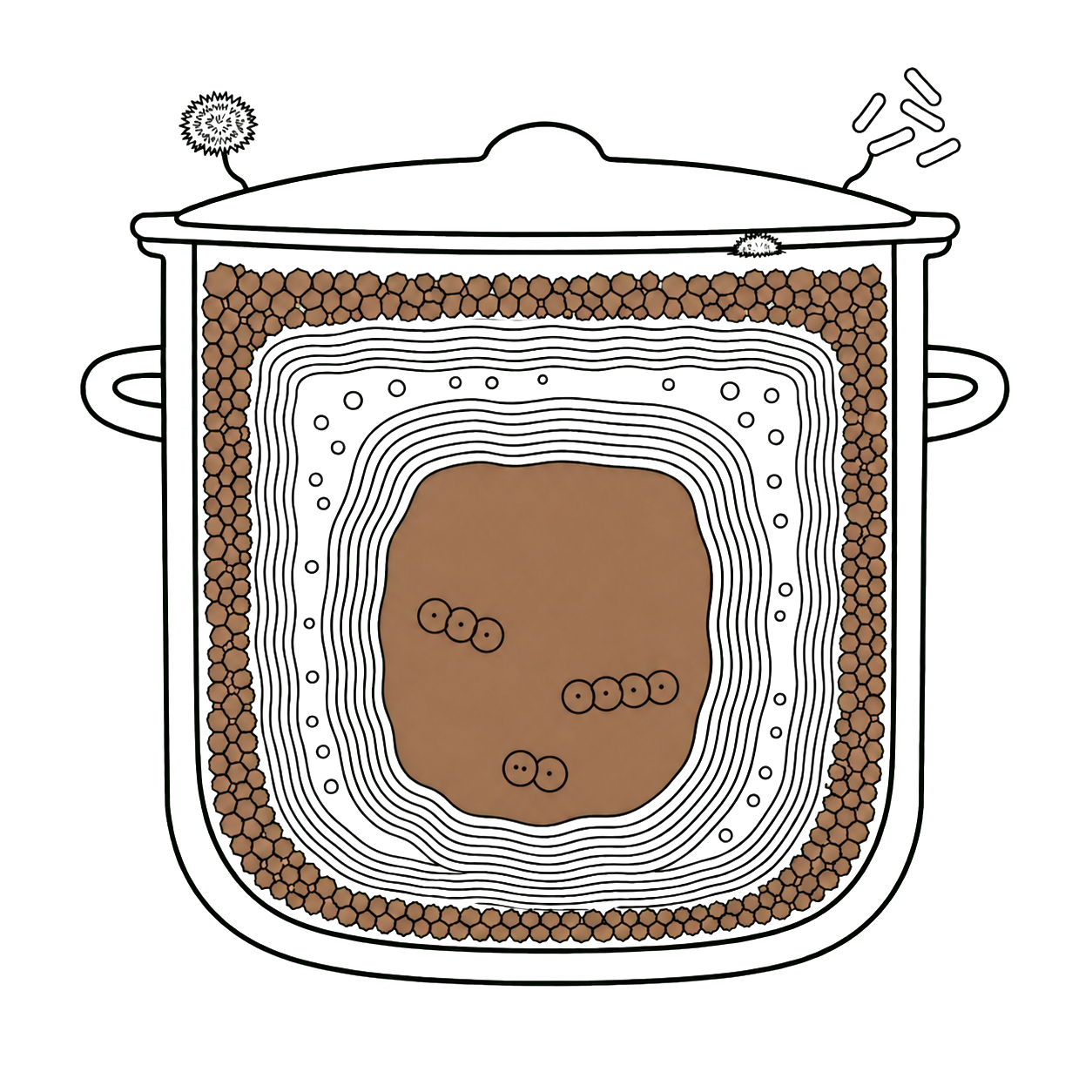 Honestly, leaving it in the kitchen for six months is frightening. Why does it not go bad? What is the white stuff on the surface? And is cutting the salt a little really not allowed?It does not go bad because the microbes you do not want cannot live thereStanding at room temperature for six months without going bad is design, not luck. How the four walls of salt, acid, low oxygen and time stack up, and why they increase over time. Also the real reason salt cannot be reduced, and how to tell what the white stuff on the surface is by its shape rather than its color.Read on About 9 min to read05
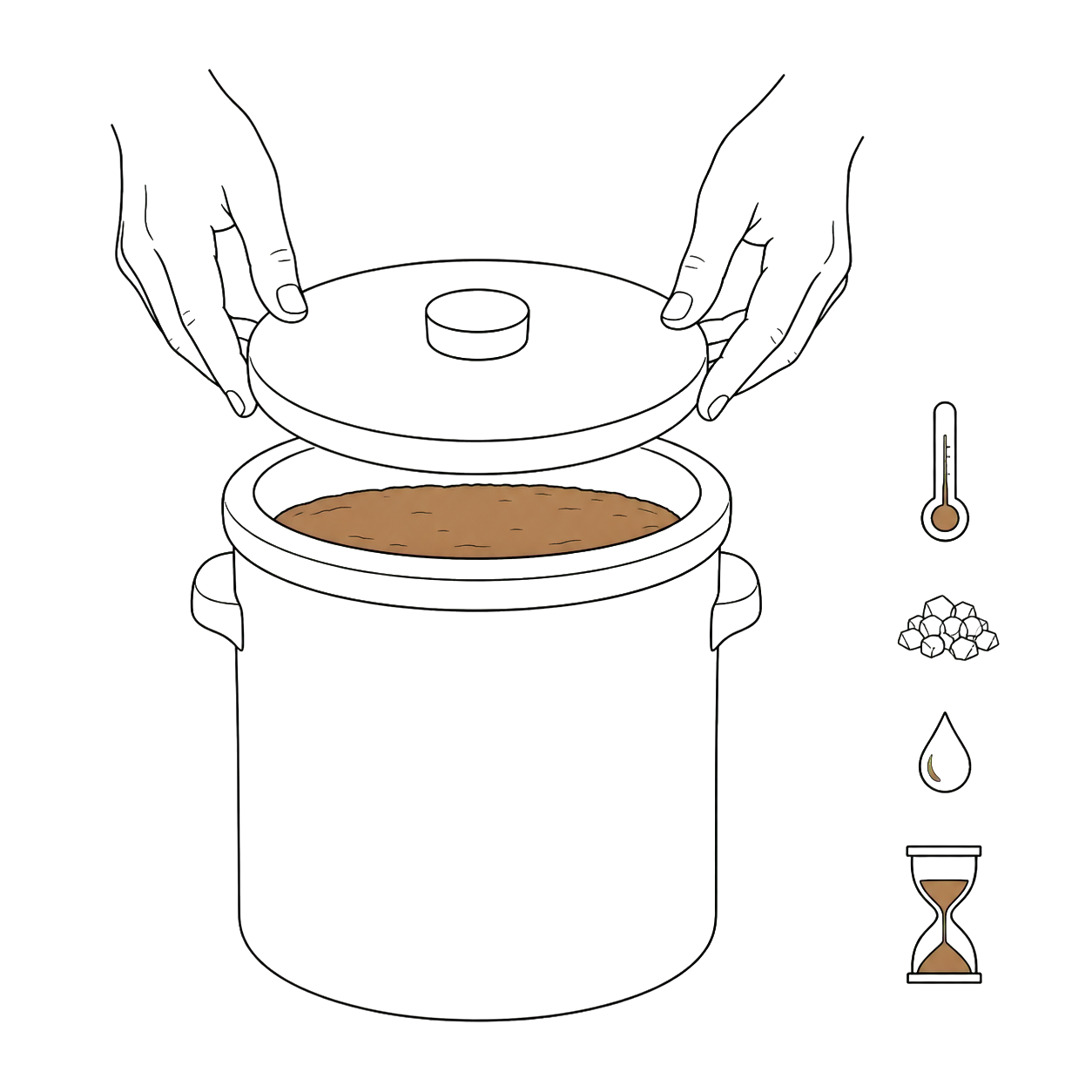 I understand the steps, but why that order? What happens if I skip one? And surely this needs special equipment or a special place?You decide only four things, and the work ends before the lid goes onIn making miso there are only four things a person can touch: temperature, salt, water and time. We connect the seven steps — soaking, cooking, mashing, cooling, packing — to which of the four each one is setting. This is a chapter about being able to read the instructions rather than memorise them.Read on About 9 min to read06
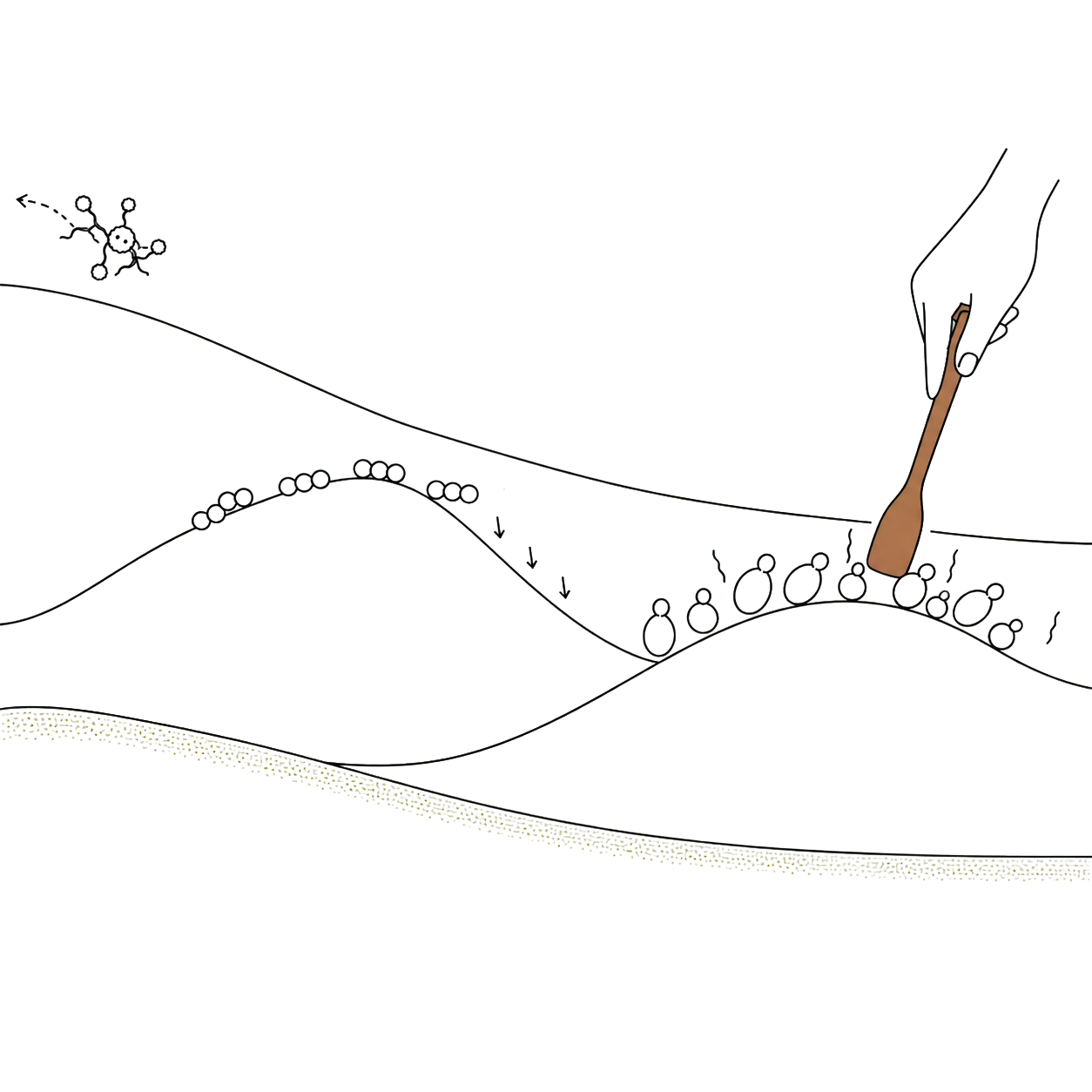 You tell me to leave it alone, but I want to know what is going on inside. When can I eat it? And who decides that it is done?While you wait, the lead roles quietly change overWhat is going on inside during those six months when you are doing nothing? Lactic acid bacteria turn the place sour, and yeasts arrive after them. What can appear at the surface without cause for concern, and what cannot. And how being ready is not a state of the miso but a day that you decide.Read on About 10 min to read
You know the word "fermentation", but what is actually going on? How is it different from going bad? And half a year — does that not sound like hard work?Fermentation is leaving the remaking to microbesFermentation means entrusting the remaking of food to microbes. We look at how the line between fermentation and spoilage is drawn from our side, how safety is nonetheless decided by conditions you can measure, and how, of the six months a batch takes, you move your hands for only one day.Read on About 9 min to read02Is koji just that white rice? The bag says it is a mold — is it really all right to eat? And once the batch is made, are the microbes still alive in there?The workers are not the microbes but the enzymes they left behindWhat koji really is, and what to make of the worry about eating a mold. Then the least intuitive thing about miso: the moment you prepare the batch, the koji mold leaves the stage — and fermentation carries on anyway. This is also where the reason for cooling to body temperature becomes clear.Read on About 10 min to read03Boiled soybeans are not especially tasty, so why does the flavor become so concentrated once they are miso? Is something increasing?It tastes good because big molecules have no tasteBoiled soybeans do not taste of miso. Fermentation is not adding flavor; it is cutting the flavor that was already there down to a size the tongue can receive. We look at how umami, sweetness and bitterness all come out of the same reaction together, and how color becomes a scale of how far things have gone.Read on About 9 min to read04Honestly, leaving it in the kitchen for six months is frightening. Why does it not go bad? What is the white stuff on the surface? And is cutting the salt a little really not allowed?It does not go bad because the microbes you do not want cannot live thereStanding at room temperature for six months without going bad is design, not luck. How the four walls of salt, acid, low oxygen and time stack up, and why they increase over time. Also the real reason salt cannot be reduced, and how to tell what the white stuff on the surface is by its shape rather than its color.Read on About 9 min to read05I understand the steps, but why that order? What happens if I skip one? And surely this needs special equipment or a special place?You decide only four things, and the work ends before the lid goes onIn making miso there are only four things a person can touch: temperature, salt, water and time. We connect the seven steps — soaking, cooking, mashing, cooling, packing — to which of the four each one is setting. This is a chapter about being able to read the instructions rather than memorise them.Read on About 9 min to read06You tell me to leave it alone, but I want to know what is going on inside. When can I eat it? And who decides that it is done?While you wait, the lead roles quietly change overWhat is going on inside during those six months when you are doing nothing? Lactic acid bacteria turn the place sour, and yeasts arrive after them. What can appear at the surface without cause for concern, and what cannot. And how being ready is not a state of the miso but a day that you decide.Read on About 10 min to read