
Learn 02 — Going Deeper
Down the Fermentation Rabbit Hole
A deeper turn through fermentation, for those who have finished Basics. A fresh look at it all through molecules and numbers. Come on in, if you are the type to get hooked.

01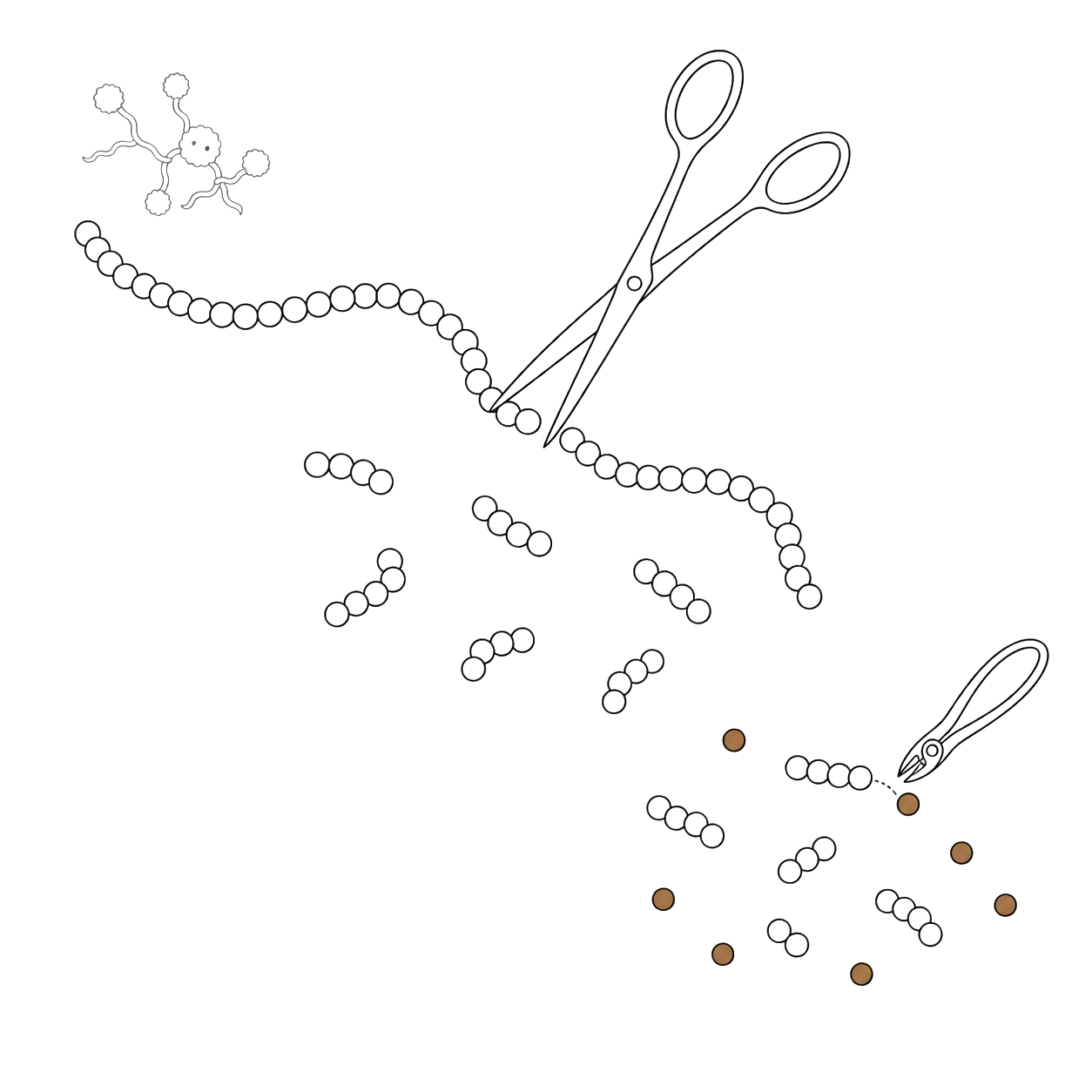 I understand that enzymes do the cutting. But why does it take half a year? Would it not be faster if you warmed it? And why do the hard edges of a young miso soften with time?The optimum temperature is not the best temperatureWe look at the speed of enzymes as quantities: Km and Vmax, Q10, inactivation and inhibition. The optimum temperature is the point where speed peaks, not where total work peaks. And the bitterness of a young miso fades because there are two ways of cutting, and they take effect at different times.Read on About 9 min to read02
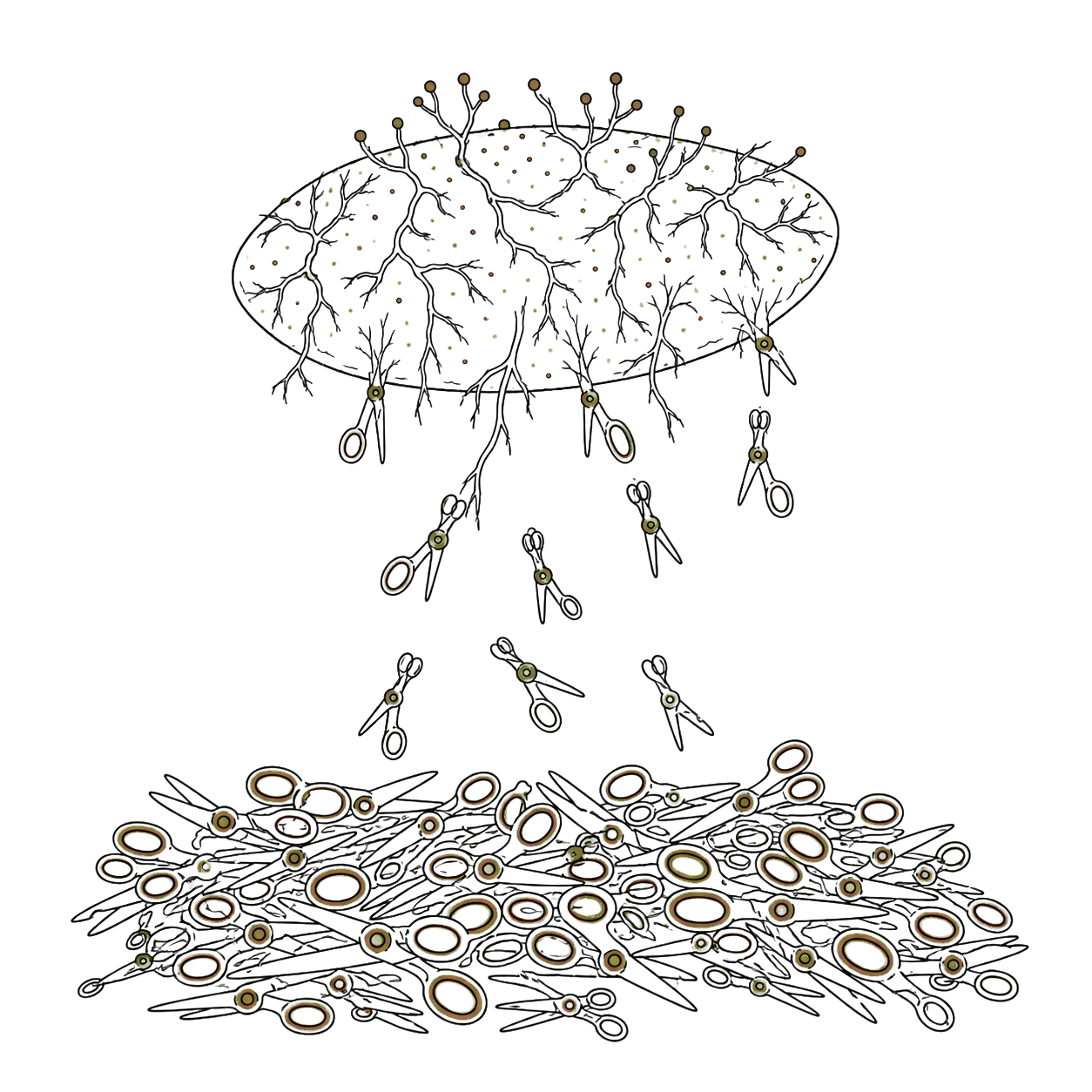 What makes a good koji? How is it made? Fresh koji or dried koji — which is better? And is it really true that koji mold is safe?Making koji means stockpiling enzymesBasics treated koji as something you simply buy. Yet most of the outcome is decided by the koji. Here we open up tane-koji, among the oldest commercial microbes in the world; the lineage that has been made unable to produce toxin; what the appearance called haze actually means; and the real difference between fresh and dried koji.Read on About 9 min to read03
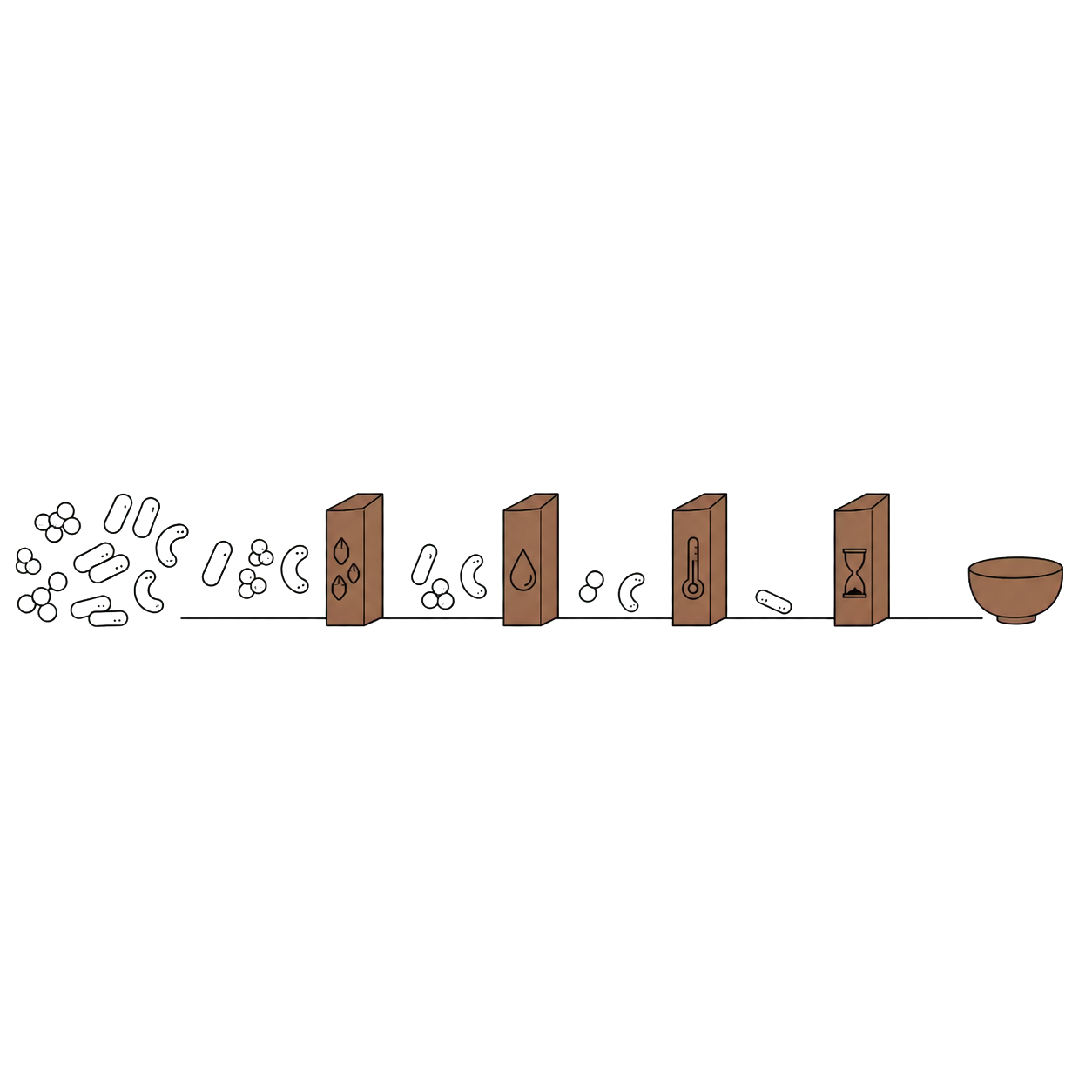 People say salt shuts microbes out, but I do not really follow how. How much salt counts as safe?Salt is not killing the microbes. It is taking the water firstSalt is not killing microbes. It takes water out of their cells first, reducing the water they can use. The measure of that amount is water activity. We look at the lower limit for growth, which differs by organism; at hurdle technology, which stacks low walls; and at why this site does not show one particular measure of salt.Read on About 9 min to read04
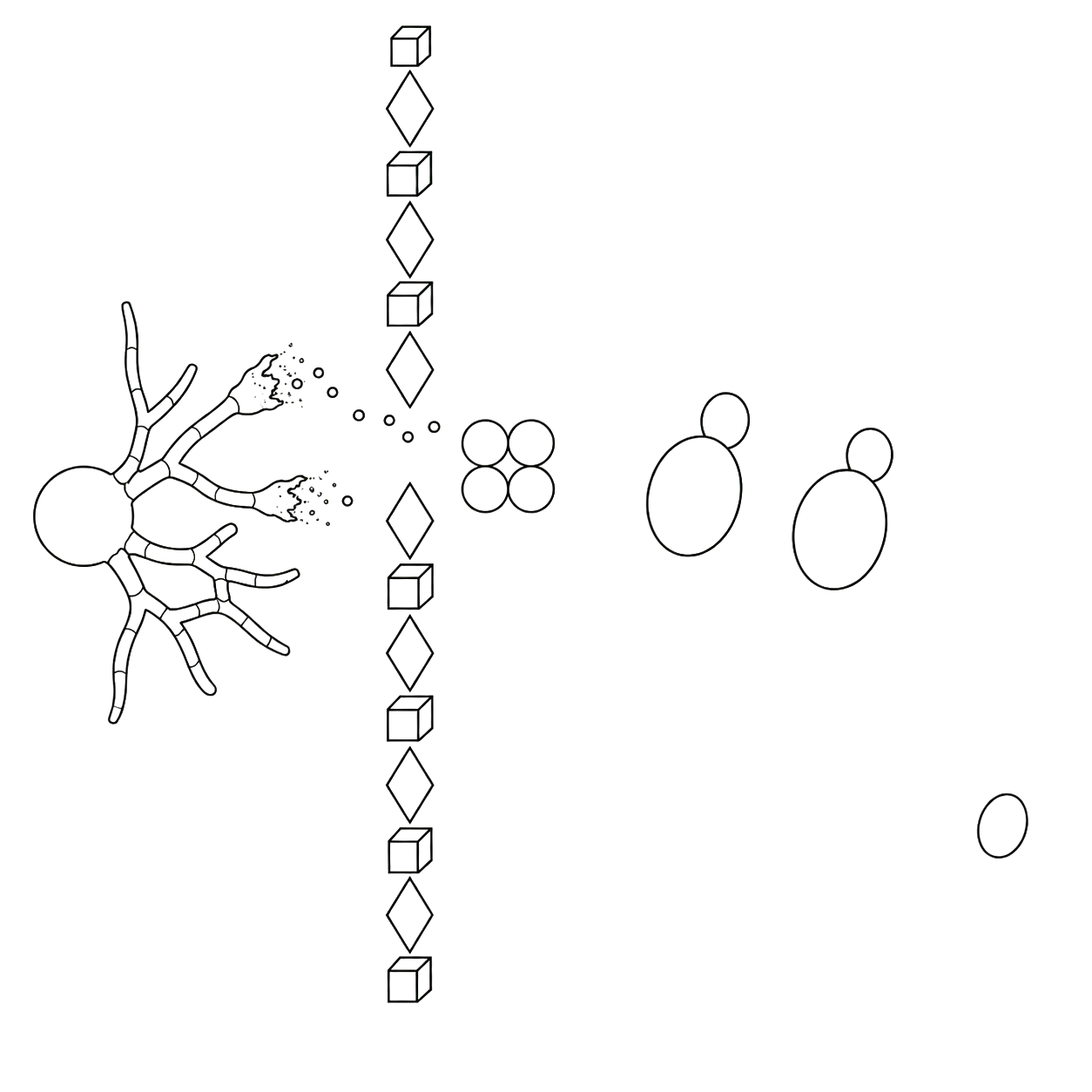 Once the koji mold has left, who is working in there? And who decides the order? Come to that, why do the yeasts not break the sugar down all the way?The second half is carried by the few residents that got past the saltAfter the koji mold leaves, the work is done by the few residents that made it past the salt. What decides the order of the handover is not people but the environment the previous residents rewrote. Having no oxygen is one of the walls, and at the same time a metabolic switch that stops the breakdown of sugar partway.Read on About 10 min to read05
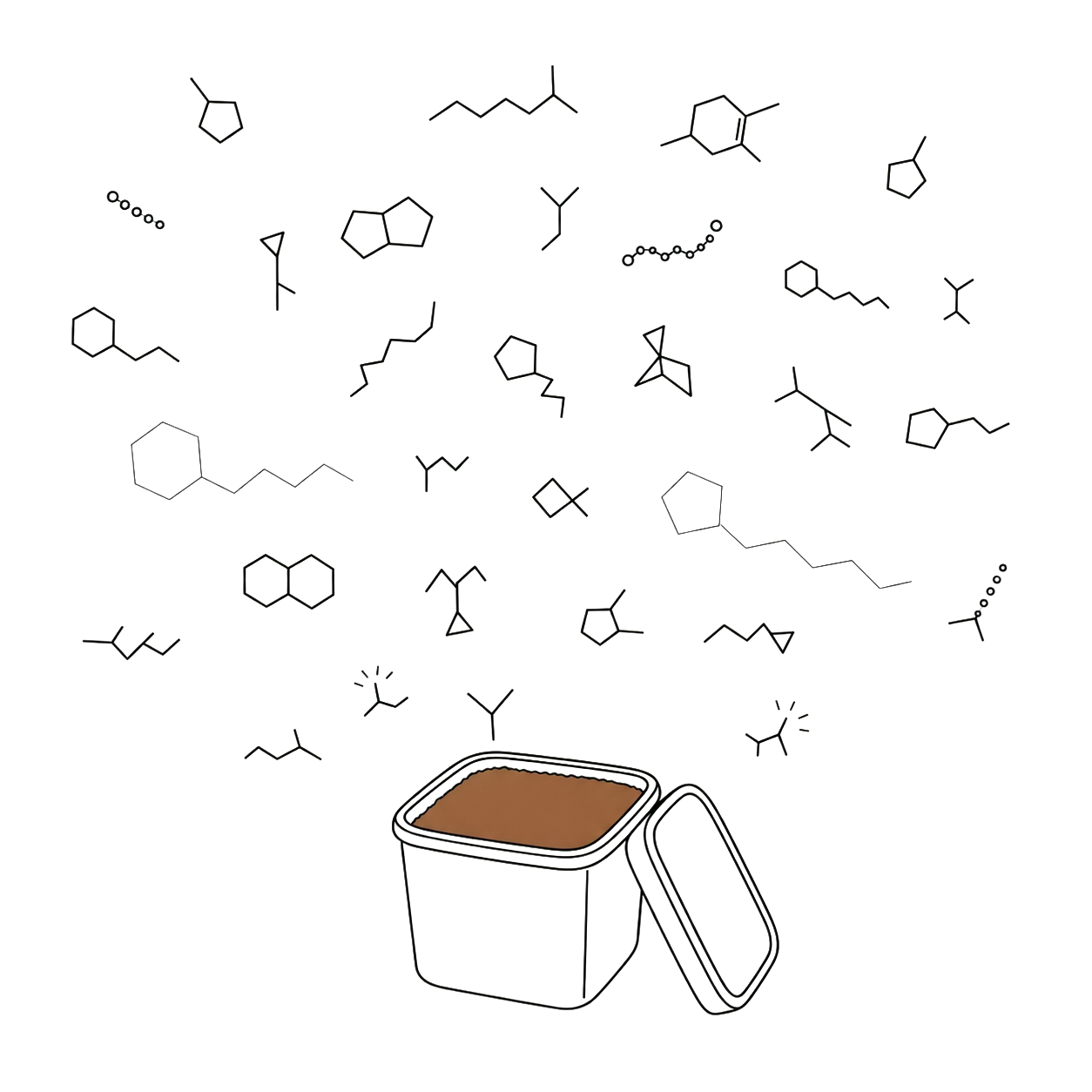 That smell when you lift the lid. What substance is it? Is it a single compound? And does it really get better the longer you leave it?There is no such molecule as "the smell of miso"The smell when you lift the lid is the sum of several hundred volatile compounds. Looked at through the concentrations we can actually perceive, the most abundant compound is not necessarily the leading one. The Maillard reaction that deepens the color is a branch off the same trunk as the aroma — and it advances by eating the raw material of umami.Read on About 9 min to read06
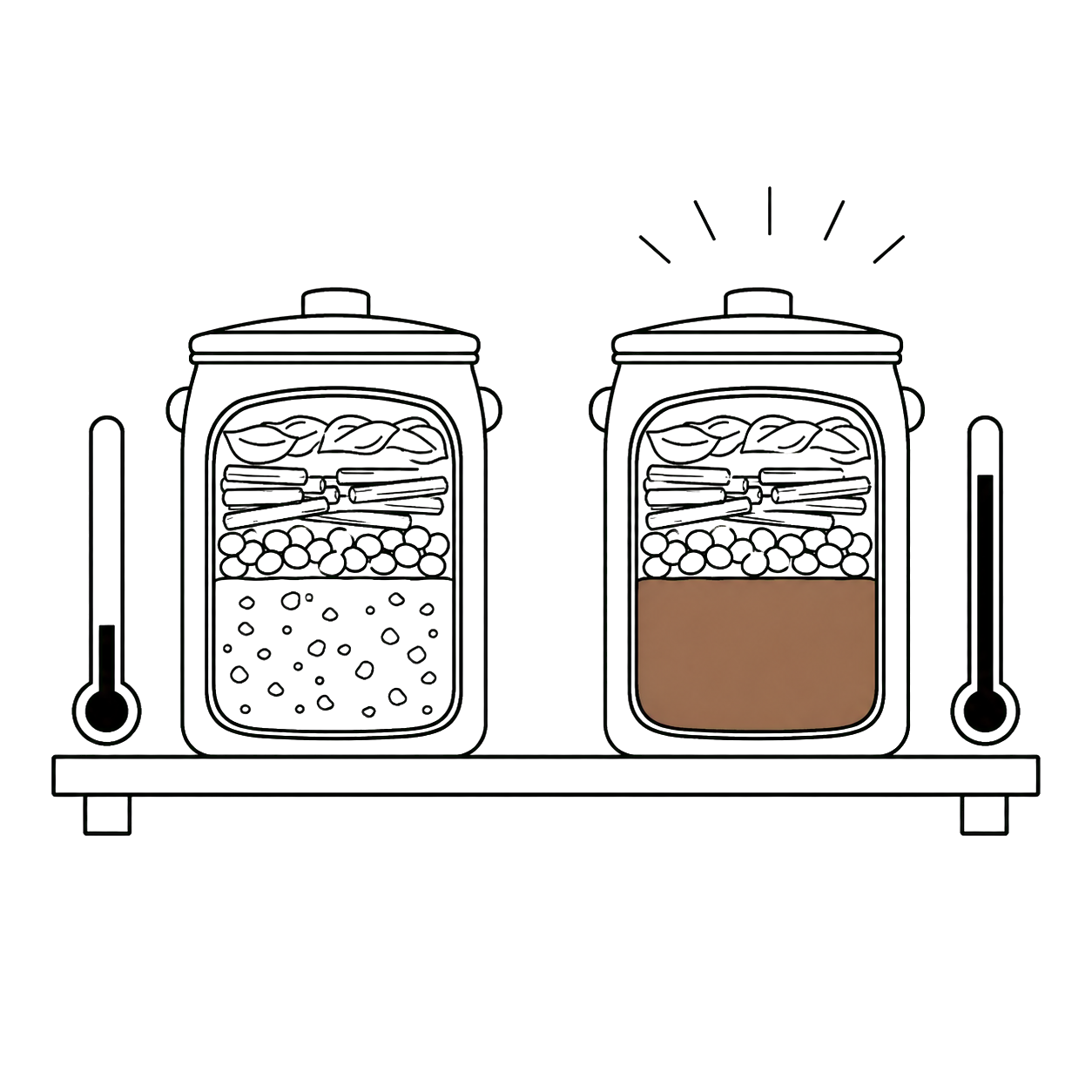 People often say the microbes of a place make the flavor — is that true? Why is it different every time even with the same ingredients? And does it have to be soybeans?When the same recipe tastes different, it is usually the temperature of where you kept itWe look at the claim that "the microbes of a place make the flavor" as far as it has actually been verified. We reorder what is really at work from largest effect to smallest, and draw a line between the part that can be measured and the part that remains after measuring. Not being able to reproduce something is not the same as not being able to control it.Read on About 8 min to read
I understand that enzymes do the cutting. But why does it take half a year? Would it not be faster if you warmed it? And why do the hard edges of a young miso soften with time?The optimum temperature is not the best temperatureWe look at the speed of enzymes as quantities: Km and Vmax, Q10, inactivation and inhibition. The optimum temperature is the point where speed peaks, not where total work peaks. And the bitterness of a young miso fades because there are two ways of cutting, and they take effect at different times.Read on About 9 min to read02What makes a good koji? How is it made? Fresh koji or dried koji — which is better? And is it really true that koji mold is safe?Making koji means stockpiling enzymesBasics treated koji as something you simply buy. Yet most of the outcome is decided by the koji. Here we open up tane-koji, among the oldest commercial microbes in the world; the lineage that has been made unable to produce toxin; what the appearance called haze actually means; and the real difference between fresh and dried koji.Read on About 9 min to read03People say salt shuts microbes out, but I do not really follow how. How much salt counts as safe?Salt is not killing the microbes. It is taking the water firstSalt is not killing microbes. It takes water out of their cells first, reducing the water they can use. The measure of that amount is water activity. We look at the lower limit for growth, which differs by organism; at hurdle technology, which stacks low walls; and at why this site does not show one particular measure of salt.Read on About 9 min to read04Once the koji mold has left, who is working in there? And who decides the order? Come to that, why do the yeasts not break the sugar down all the way?The second half is carried by the few residents that got past the saltAfter the koji mold leaves, the work is done by the few residents that made it past the salt. What decides the order of the handover is not people but the environment the previous residents rewrote. Having no oxygen is one of the walls, and at the same time a metabolic switch that stops the breakdown of sugar partway.Read on About 10 min to read05That smell when you lift the lid. What substance is it? Is it a single compound? And does it really get better the longer you leave it?There is no such molecule as "the smell of miso"The smell when you lift the lid is the sum of several hundred volatile compounds. Looked at through the concentrations we can actually perceive, the most abundant compound is not necessarily the leading one. The Maillard reaction that deepens the color is a branch off the same trunk as the aroma — and it advances by eating the raw material of umami.Read on About 9 min to read06People often say the microbes of a place make the flavor — is that true? Why is it different every time even with the same ingredients? And does it have to be soybeans?When the same recipe tastes different, it is usually the temperature of where you kept itWe look at the claim that "the microbes of a place make the flavor" as far as it has actually been verified. We reorder what is really at work from largest effect to smallest, and draw a line between the part that can be measured and the part that remains after measuring. Not being able to reproduce something is not the same as not being able to control it.Read on About 8 min to read